
Let your fingers be the judge as to whether dog or cat scratches need repair. If you can feel the damage, it should be repaired. Otherwise a new finish will correct it.
Leather Cat Scratch Repair
Real leather repairs easily with tiny beads of super glue and sanding. This video demonstrates.
How do you know if it's leather? Gently sand a hidden area with 320 grit sandpaper. If the sandpaper loads up with a colored dust, it's real.
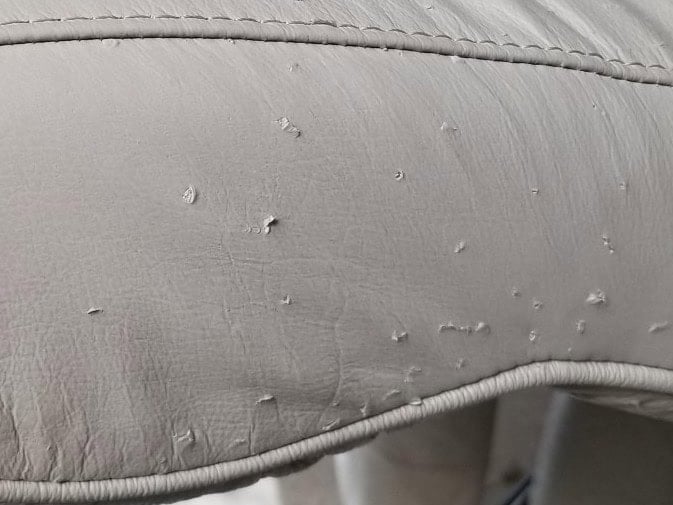

Unfortunately, it's not so easy repairing cat scratches on synthetics. Vinyl, bonded or faux leather need a flexible filler putty. Either an air-dry or a heat-cure can be used. Which putty should I choose?
Click here for a video and instructions demonstrating the use of heat-cure putty on cat scratches.
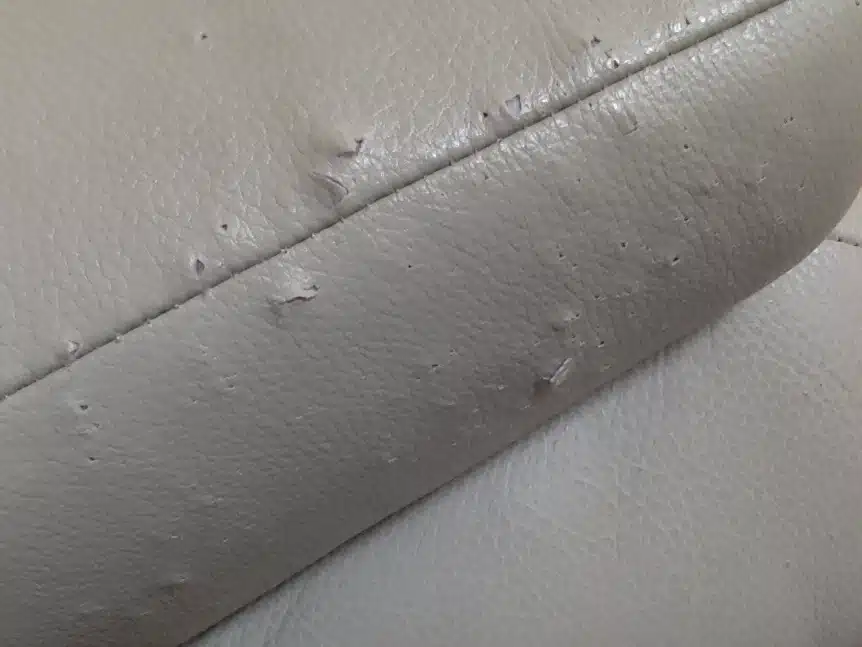

Concentrated 'scratching post' damage is also best repaired using a flexible filler using these instructions.
Only the air-dry filler should be used on leather; it also works on vinyl and is great for novices. A heat-cure filler can be used on synthetics like vinyl, bonded and faux leather but requires a heat gun and grain pads. Learn more about repair putties here.
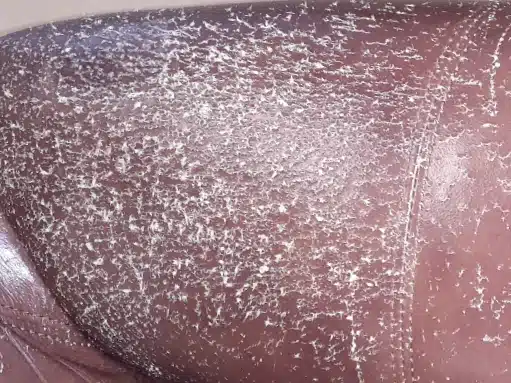
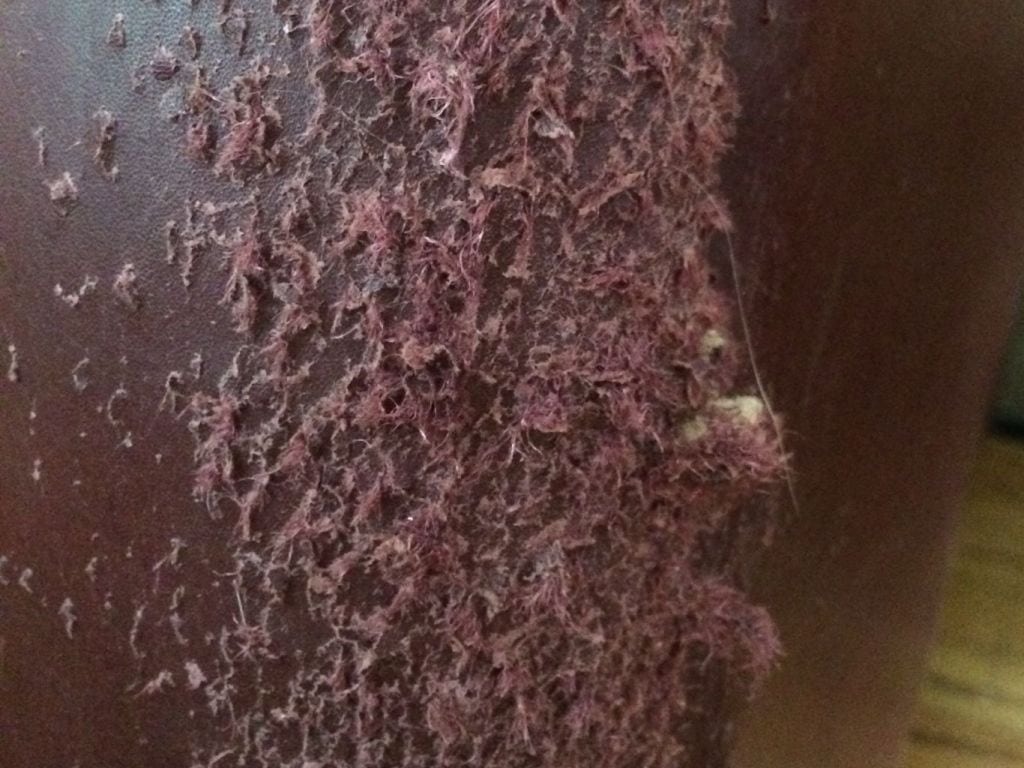
Repair Cat Scratches on Real Leather
- Clean the surface with alcohol to remove other conditioners or protectants. Allow to dry.
- Trim away flaps that will not lay down smoothly. Use a tiny drop of super glue to tack flaps back into place. Quickly remove excess super glue with a paper towel.
- Apply a thin coat of Rub 'n Restore® Color to the leather, and allow to dry. The color will correct minor scuffs, making areas of damage more obvious and therefore minimizing your work.
- Apply a tiny amount of super glue to the area needing repair using a large needle. Use the corner of a paper towel to feather the glue along its perimeter and to clean up excess. Work in thin layers and avoid coating large areas, as the glue dries hard and rigid.
- Gently sand while the glue is still wet. The fine dust from the leather (or Rub 'n Restore® paint) catalyzes the super glue.
- Repeat steps 4-5 until the surface feels smooth.
- Dab or stipple a thin coat of Rub 'n Restore® Color on the repaired area using a damp sponge, taking care to blend. Allow to dry.
- If any damage remains, repeat steps 4-7.
- Follow with a clear finish or Satin Sealer, if recommended or desired.
Please do not declaw your feline!
This procedure is amputation of the bone to the last knuckle, not mere removal of the nail. Onychectomy is banned in many countries and opposed by the Humane Society and the American Society for the Prevention of Cruelty to Animals. Declawing can decrease use of a litter box and increase biting. Cats are smart creatures and can be easily trained with a spray bottle of water (set on shoot-to-soak) and pheromone sprays. Give them a scratching post where they can engage in their natural behavior. You can also trim their claws using pet nail clippers.
Repair Dog Scratches on Leather
Dog scratches are often superficial. If the damage cannot be felt with a fingertip, then a coat of color will usually fix it.
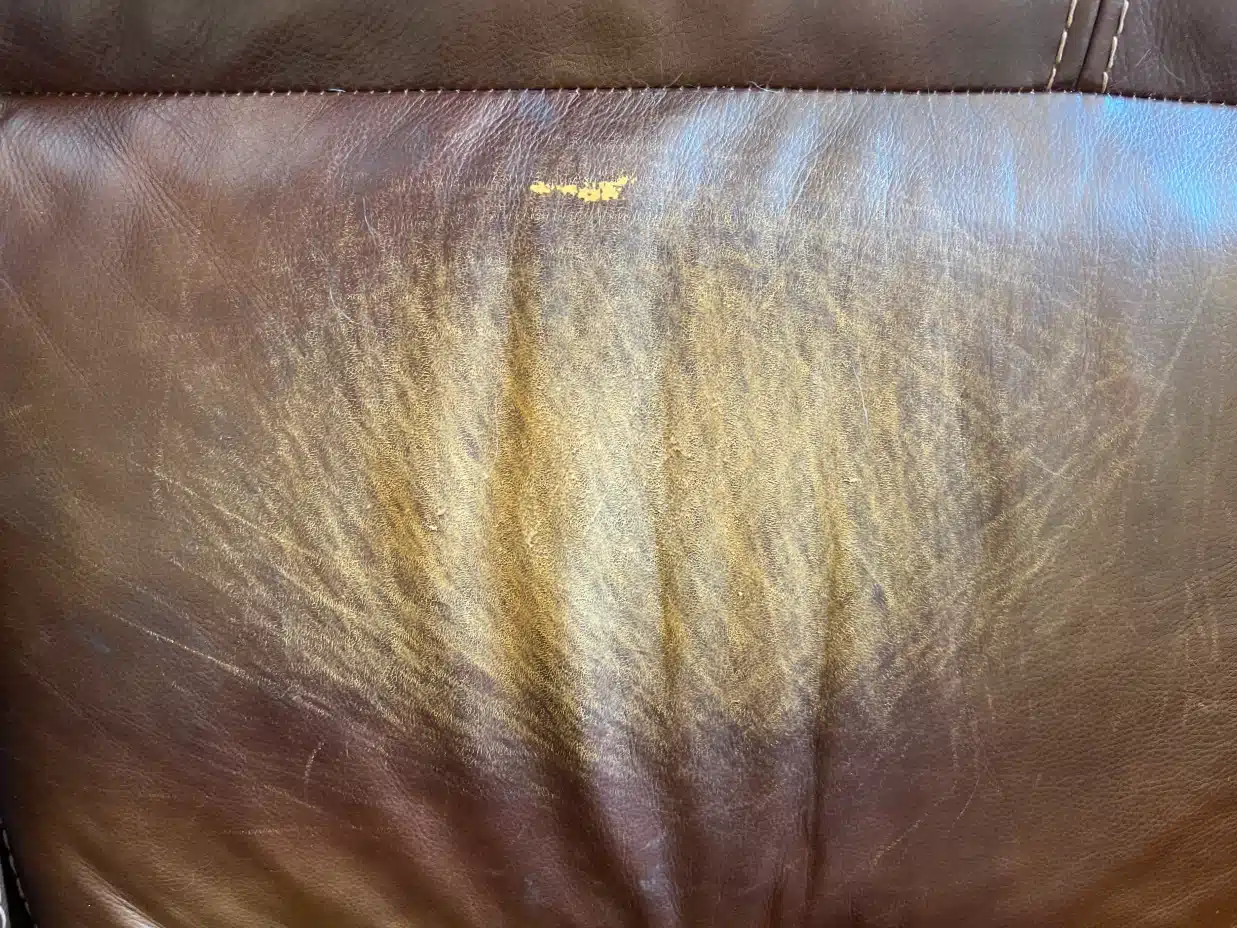

If color doesn’t fix the scratches, and you decide repair is needed, remove the color with alcohol or lacquer thinner. Then repair with an air-dry filler putty. This video This video demonstrates near the end at minute 8:00.
What about dog chew damage? Click here.
I’m buying a couch with lots of faint cat scratches, you can see them when the light hits it a certain way, but there’s no real depth to them. I’m thinking a very light pass with sandpaper or steel wool and then new color? It’s a dark slate gray. Thx
Yep, I’d start with 220 or 320 grit, and polish with 500. Our Slate or Smoke sound like good candidates, but I’d order swatches first. If you email photos, we can give you a coupon to get them free.
I already ordered slate, I’m going for it! 🙂
Can your product be used successfully without having to repaint or try to match color.? Leather chair is mauvish/pinkish. Cat scratched.
A new finish is needed to conceal repairs 99% of the time, especially on cat scratches repaired with this method. A mauve or pink color would absolutely need customization lest you want to refinish the entire chair in a different color and have the potential of more maintenance.
The need is white leather sofa being scratched by dogs accidentally. How do I know what shade of white to purchase? Barbara. Tx
Great video/tutorial. My main question is, after the final coat of restorer, the leather looked quite different(flat finish) as compared to the rest of the couch(semi-glossy).
Will your product buff out by hand with a terry cloth towel or a car buffer? How long to wait after application before buffing?
Buffing with a dry rag (and use) will slightly polish the color. But for a semi-gloss finish, sounds like you need some Clear Prep+Finish. I’d mix it with equal parts color and use to add luster and blend surrounding areas.
I have a large scale hunter (dark) green sofa, love seat, wide chair and ottoman. They are very soft and comfy but I think would work as I see similar styles in your before and after gallery. I’m thinking Taupe — will that cover OK? Also have cat scratches and a few pin holes from back claws climbing up the arms. Assume your filler will take care of that as directed?
Thanks in advance. This may be the perfect short term fix until I move in a couple of years.
Any holes need to be subpatched before repair. We’d need you to submit photos in the evaluation for us to advise you better. Color changes are inherently more maintenance and not recommended if the leather is already rather worn and dogs will continue to use the piece(s).
Thanks for the great tips. What is the product you’re using which you’ve called Rubber Restore?
You’re on the right website. Here’s the catalog.