Heat-Cure vs. Air-Dry Repair Putty: Which Filler Is Right for Your Leather or Vinyl?
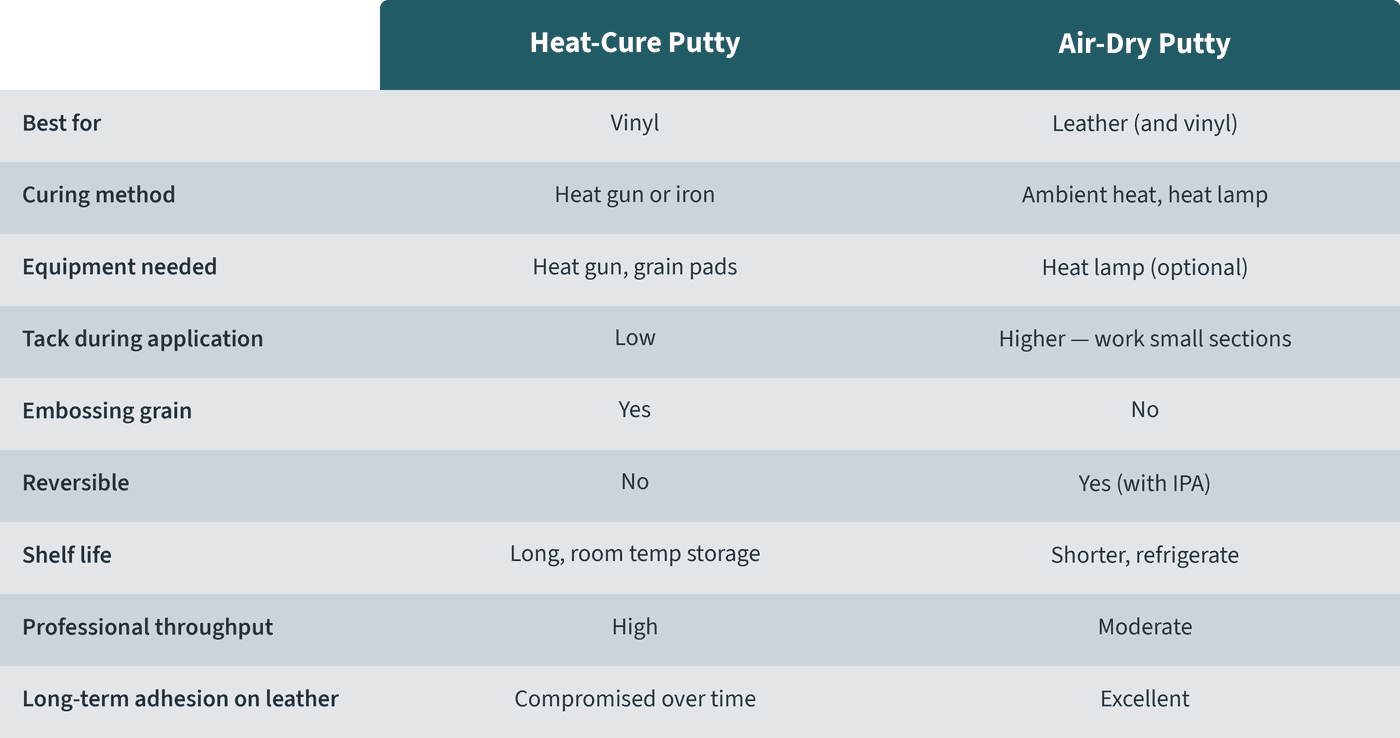
Call any leather and vinyl repair professional, and you'll likely find a plastisol putty in their tool kit. Plastisol putties cure quickly under a heat gun or iron and allow for fast turnover. They're the best choice for repairing cracks and tears in vinyl and other synthetics, but their speed becomes a long-term liability on real leather. We've been repairing leather and vinyl for 40 years, and until recently, even we didn't fully understand why water-based air-dry putties are the superior choice for real animal hide.
Plastisol (Heat-Cure) Putty
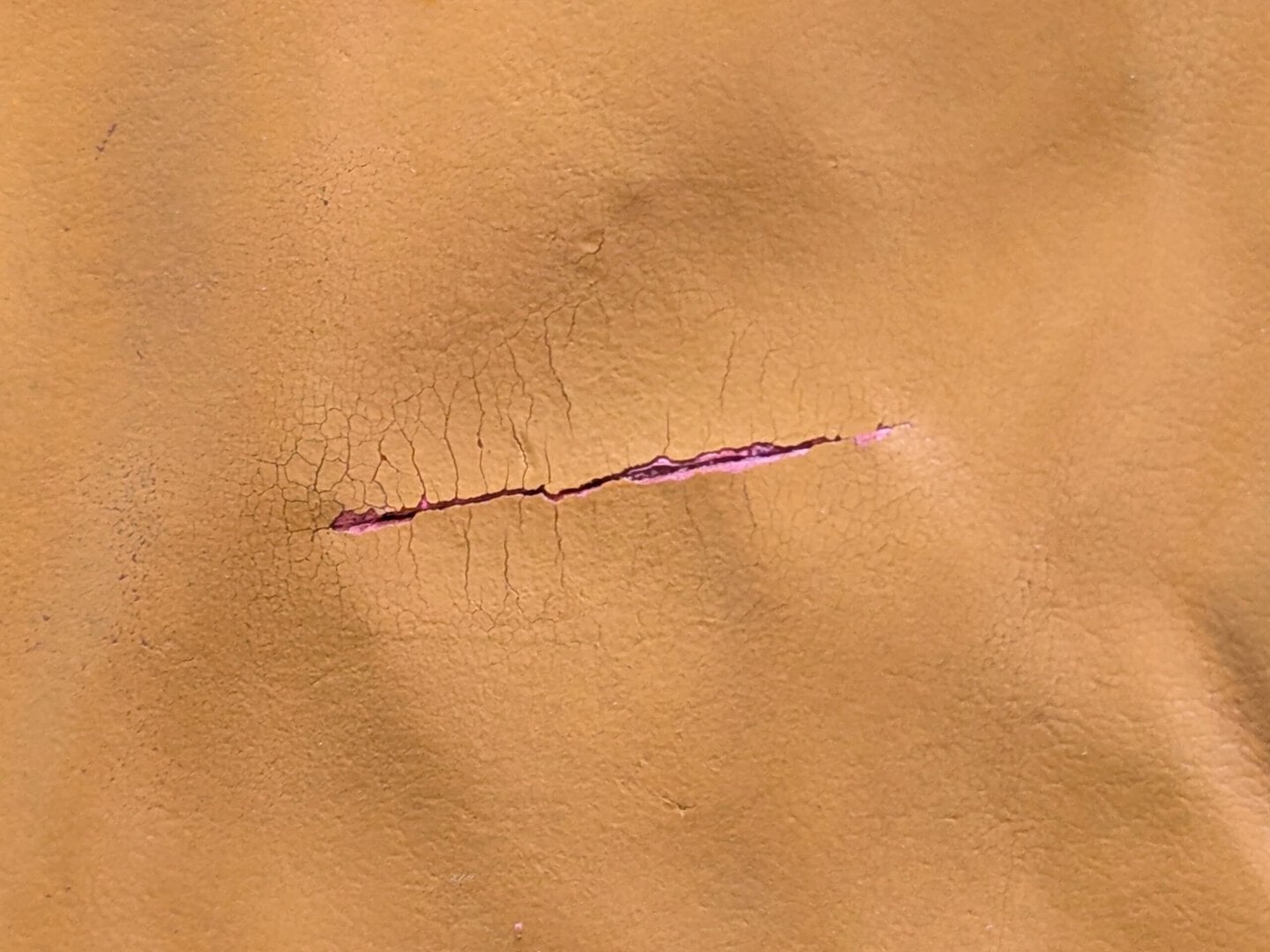
Just like they sound, plastisol putties are plastic: a PVC resin suspended in a plasticizer. That formulation lets them flow and fuse under heat, and it's what makes them chemically compatible with other plastics like vinyl. Leather, however, is tanned skin with natural fatliquors and oils that gradually migrate into a plastisol putty and weaken its matrix, causing the repair to become brittle and lose adhesion. After some months or a year, the crack comes back.
Best for: Vinyl and synthetics
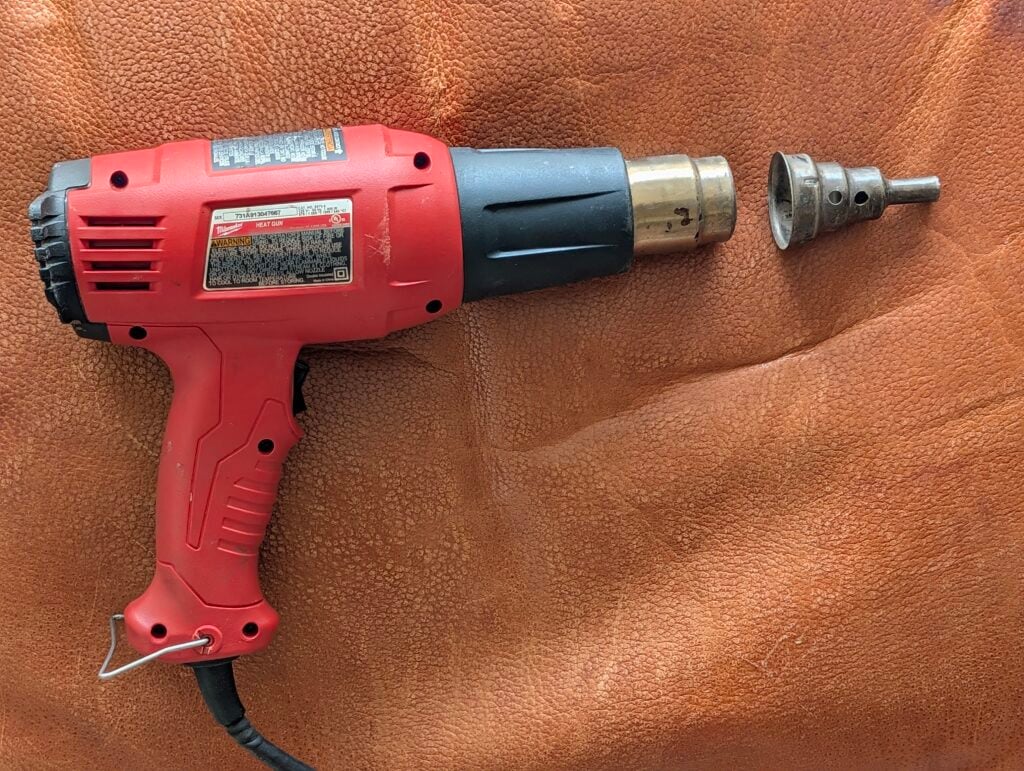
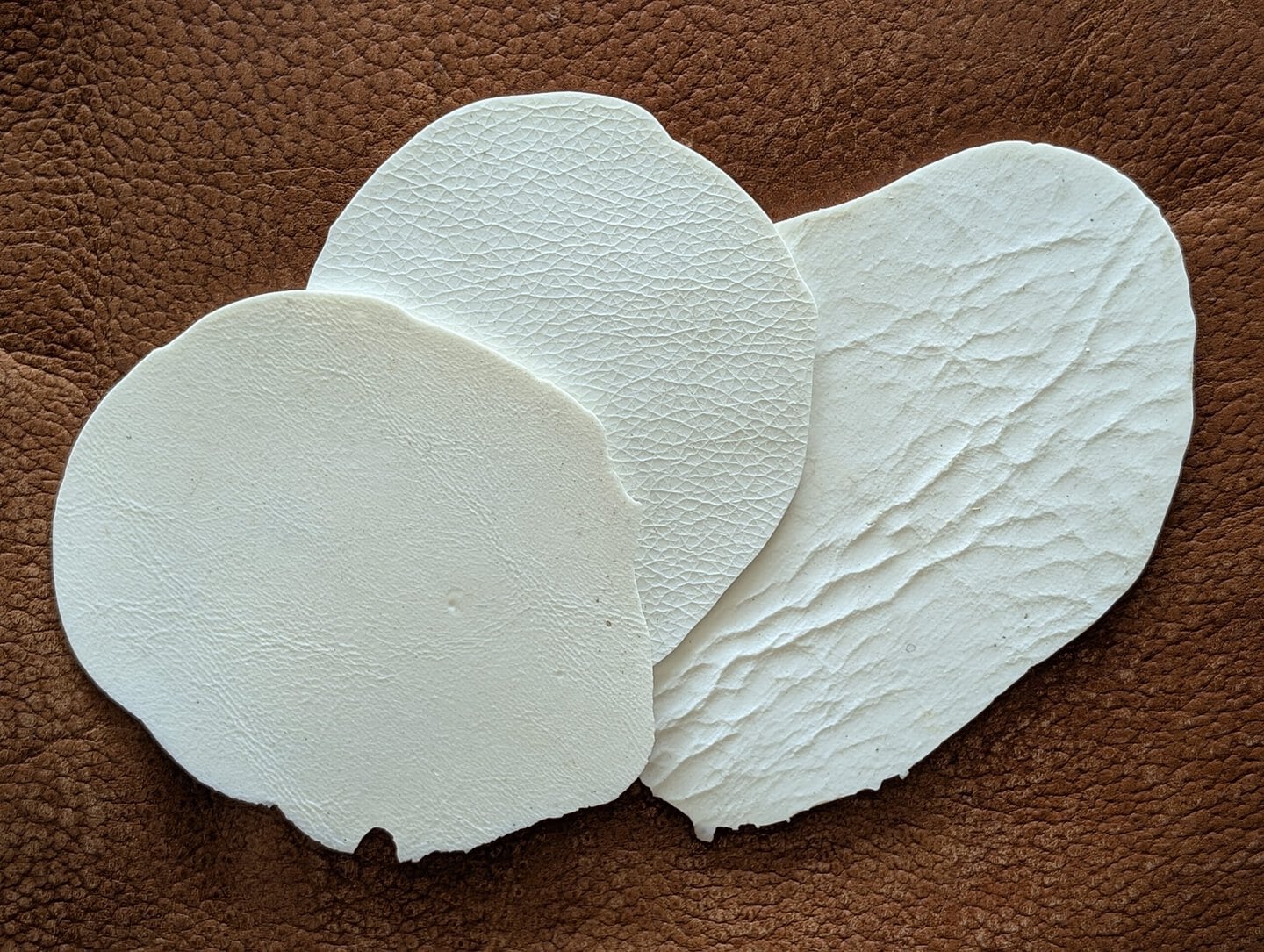
What you'll need: Application tools, plus a heat gun (or iron) and grain pads for texture
Pros
- High throughput and quick turnover. Multiple layers can be applied and cured in rapid succession. A repair can be completed on the spot.
- Easy application. Because it won't cure without a heat gun or iron, you can take your time applying it and getting a level surface. Tools wipe clean with a paper towel.
- Heat-assisted leveling and graining. The heat that cures the putty also softens the surrounding vinyl, so kinks and wrinkles can be relaxed back into place, sharp cracks or ridges can be melted and compressed, thus minimizing the amount of putty needed. Heat also makes it possible to emboss a texture into the cured putty using a silicone grain pad to blend or hide the repair.
- Room-temperature storage and long shelf life. Refrigeration is not necessary, and an opened container stays usable for years.
Cons
- Not recommended for leather. Repairs will re-crack and degrade with time.
- Higher up-front equipment cost. For a one-off DIY project, investing in a heat gun and grain pads may be cost-prohibitive.
Water-Based (Air-Dry / Low-Heat) Putty
Water-based putties cure through moisture evaporation rather than heat fusion. They don't chemically interact with the fatliquors and oils in leather the way a plastisol does, so there's no ongoing vulnerability to the substrate. The repair stays bonded. Water-based putties are also compatible with vinyl because they form a durable film that adheres mechanically to the surface. Because water-based putties work on all materials and require less equipment, they're the best choice for novices and DIYers.
Best for: Leather (but works on vinyl too!)
What you'll need: Application tools, direct sun or a heat lamp, and some time
Pros
- Versatile. Compatible with both leather and vinyl.
- Minimal equipment and lower startup cost. A sunny window, a standard incandescent bulb, or a heat lamp is all you need. That keeps costs down and makes it accessible to DIYers.
- Reversible. Even after it's cured, the putty can be gradually softened and thinned with isopropyl alcohol. That reversibility is helpful when you're learning and invaluable when working with collectibles or antiques.
Cons
- Shorter working time. Water-based putty begins to cure as soon as you apply it, so you have to work more quickly (and keep the lid closed on the jar). Work in small sections, use thin coats, and don't overwork it as it starts to skin. Remember, you can always erase with alcohol. It'll also gunk up your tools, so clean them promptly with alcohol, paper towels, and, if needed, a razor blade.
- Longer cure time. You cannot rush through multiple layers the way you can with heat-cure putty. Budget more time, or use a heat lamp to accelerate drying between coats. Always let the surface cool before applying more.
- Cures more slowly on vinyl than on leather. Leather is absorbent: it actually draws moisture out of the putty and into the substrate, which speeds curing. Vinyl is non-absorbent and oil-based, so moisture can only evaporate from the exposed surface. Repairs on vinyl take noticeably longer to dry.
- Harder to emboss. Without a heat-activated step, you can't press a grain pad into the cured surface. Texture has to be added another way. We apply a thin skim coat and use a gloved palm to impart grain.
- Doesn't play nice with alcohol or solvent based finishes. Just as alcohol can be used to erase mistakes, a solvent-based finish will damage the repair and never properly dry.
- Shorter shelf life. Keep it in the refrigerator. Even with proper storage, water-based putty will expire in 6 to 24 months and eventually solidify in the container. Don't buy more than you can use in a reasonable window.
The Takeaway
If you're repairing vinyl and willing to invest in a heat gun and grain pads, plastisol putty is the best choice. It's what enables professional-grade results on furniture, auto interiors, and boats, with fast turnover.
If you're repairing leather (or vinyl) or if you're a novice, use a water-based air-dry filler. It works on everything from garments and apparel to furniture, cars, and boats. The slower cure is actually a feature, not a flaw. You're trading an hour of speed today for a repair that still looks good in two years.
Not sure what your material is? Learn more about the types of leather here, or email photos to info@rubnrestore.com. We've been repairing leather and vinyl for 40 years and now sell these products and want to ensure you pick the best one.