
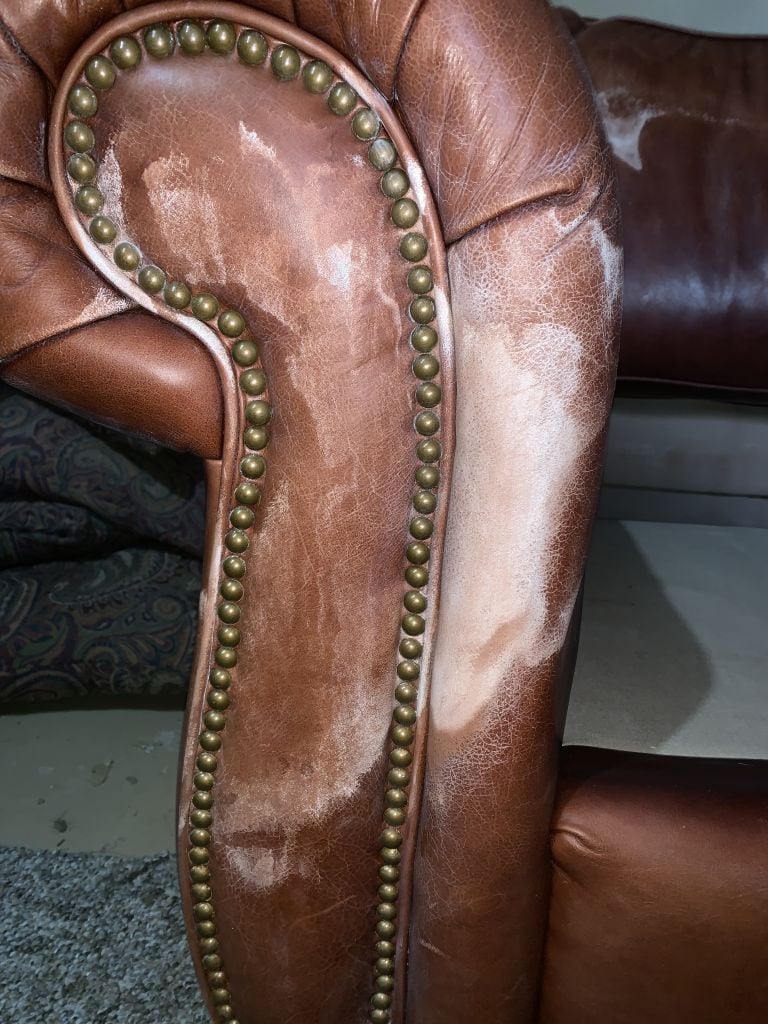
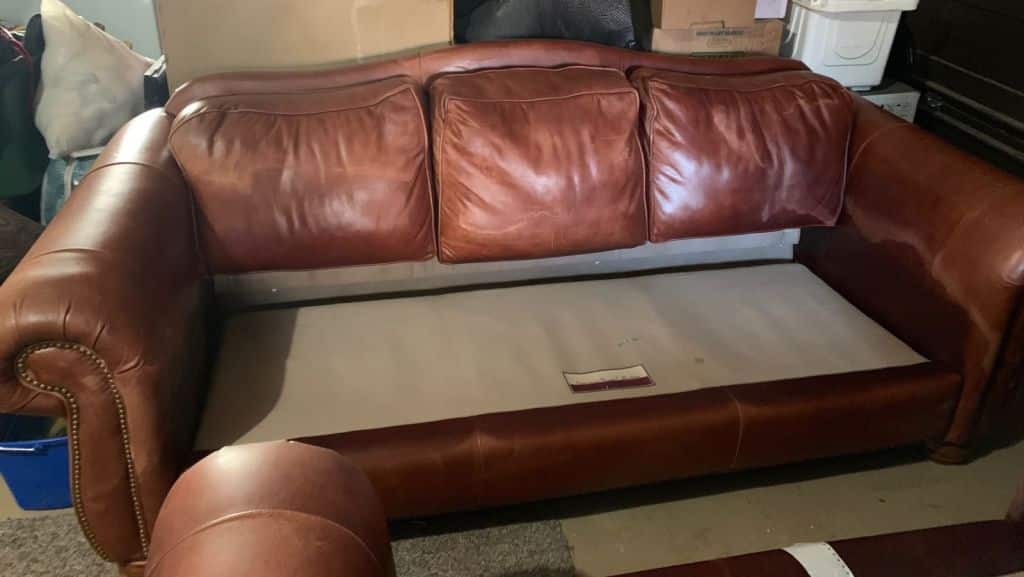
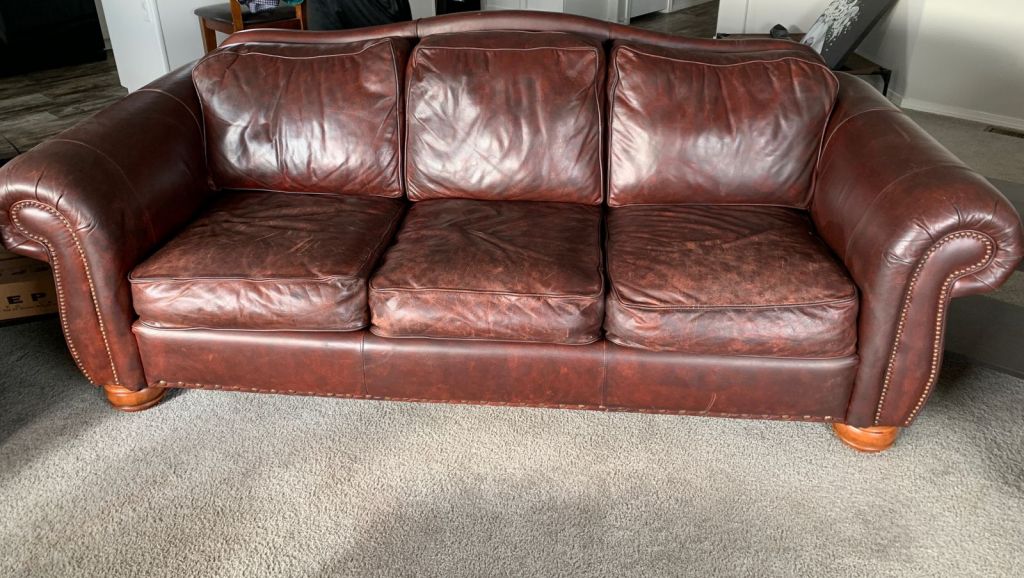
Heavy mineral deposits on leather can be stubborn. In all our decades, we’d never seen anything as tenacious or extensive as the water damage on this leather couch.

It didn't smell badly, which one would expect with bacterial contamination or mold. Fortunately the water marks were confined to the outer surface of the leather. The suede underside was pristine, so the leather did not have a stiff or etched feel.
However, the surface had a pronounced powdery texture.
Our hypothesis is there was a leak from the upper floor or roof, and minerals from drywall and insulation dissolved in the water as it ran through the building, which then dripped on and soaked into the leather. As the water evaporated the minerals left a harsh silhouette.
Cleaning with white vinegar only dispersed the minerals and made the appearance worse. Rubbing alcohol did nothing. The minerals even bled through a coat of color.
Saturating the leather with lots of water did a better job in reconstituting the minerals and allowing them to be removed with a soft rag. This couch required two soakings. A hair dryer was used to speed things along.
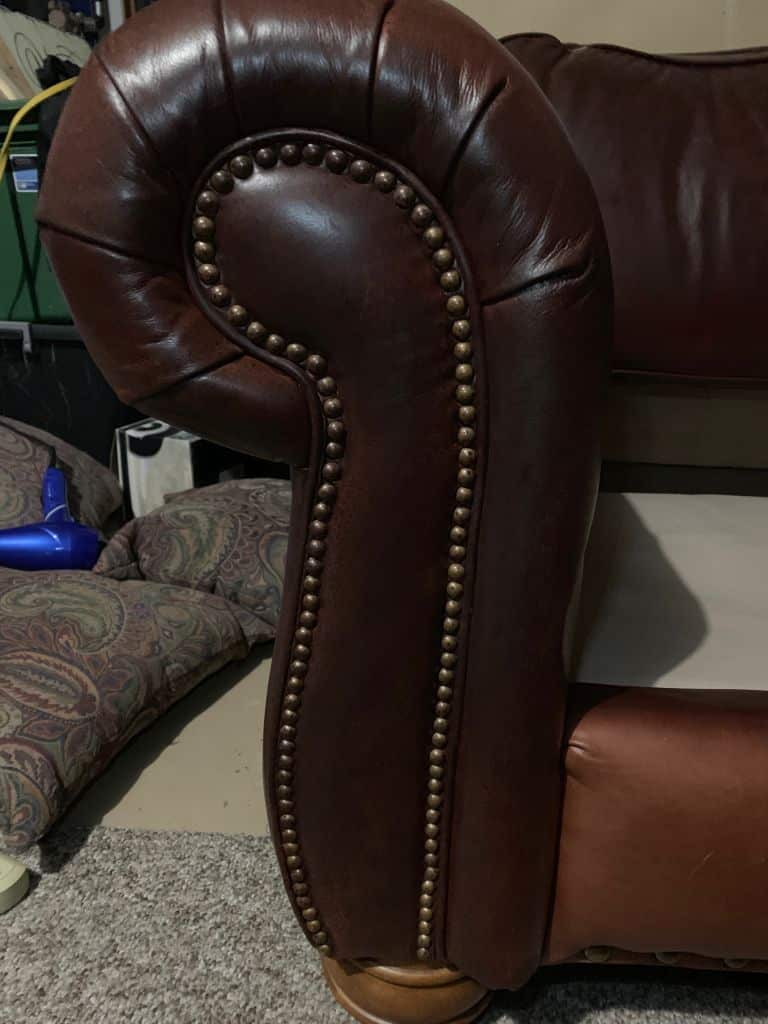
After this cleaning, a gentle sanding on rough areas made a huge improvement in appearance and feel.
Our Clear Prep+Finish™ was used as a primer on the affected areas followed by a glaze (mix of Mahogany color and Clear Prep+Finish™).

Here's how to remove stubborn mineral deposits from leather:
- Apply more water to reconstitute the minerals. Distilled water is best.
- Disperse or remove as much as possible with a soft rag.
- Allow to dry. A hair dryer can be used but take care not to get the leather hot, which can cause it to shrink and etch.
- Gently sand the leather with 320 grit wet or dry sandpaper if necessary to improve texture.
- Apply a pigmented finish to restore appearance.
If minerals remain and continue to migrate through a new finish, a specialty blocker can be applied to seal in the minerals.